



Enterprise ▸ Industries ▸ Automotive ▸ Pilots ▸
Automotive Pilot #2: Recalls

Executive Summary
SagaAutomotive™ Pilot 2 Precision Recall Containment & Liability Reduction
The Breakthrough
Pilot 2 delivers a breakthrough solution for one of the automotive industry’s most financially destructive and reputationally damaging challenges: recall inflation. Using SagaChain’s persistent object architecture and the SagaAutomotive™ Global Class Tree. Pilot 2 enables deterministic, VIN level recall containment — reducing over-recall exposure, accelerating regulatory reporting, and strengthening legal defensibility across OEMs and suppliers.
The Problem Today
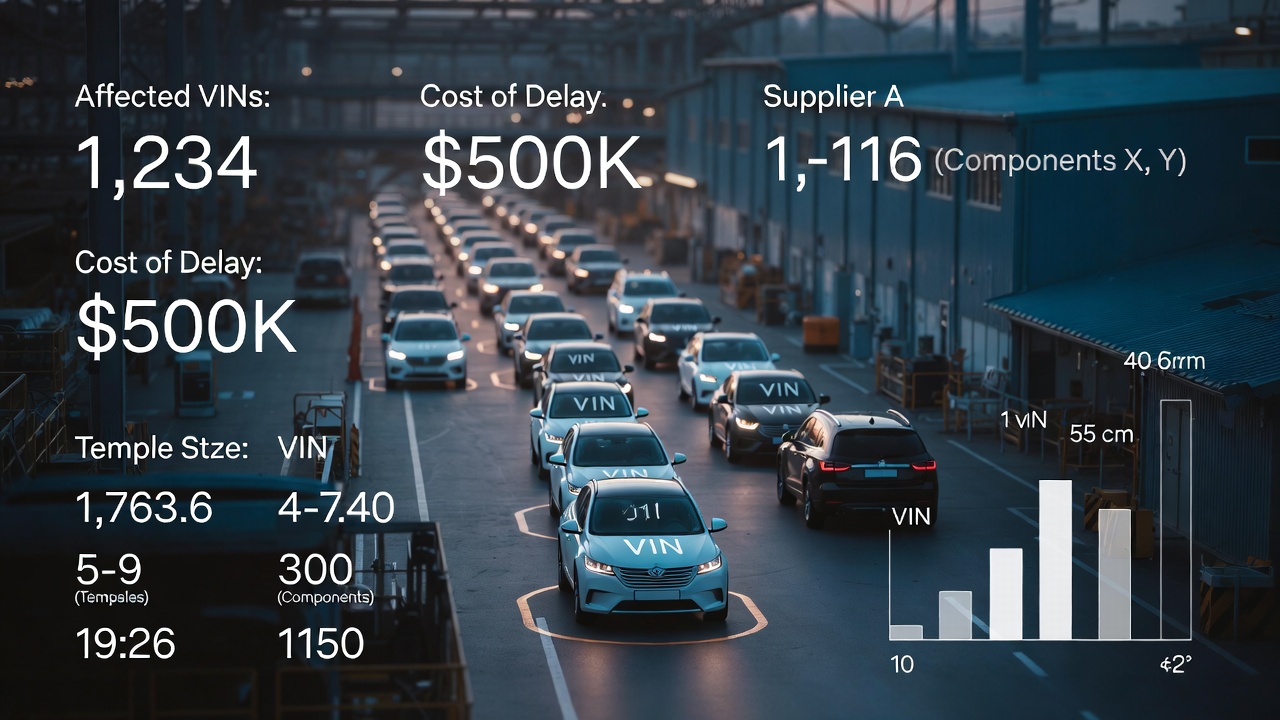
Recall inflation multiplies actual defect scope by 5–20× due to imprecise VIN mapping and unclear supplier lot attribution.
Global automotive warranty and recall costs are estimated at approximately $40B annually.
Major recall events can exceed $1B in direct costs, with historic cases reaching $4.1B for recall actions alone.
Over-recall reduces legal defensibility, increases litigation exposure, and weakens supplier recovery claims.
Regulators (e.g., NHTSA, UNECE) require accurate, time-sensitive reporting, yet upstream data fragmentation impairs precision.
What Pilot 2 Achieves
Using SagaChain’s open, programmable class tree, Pilot 2 introduces a deterministic recall mapping framework that is:
Precision-Scoped & VIN-Resolved
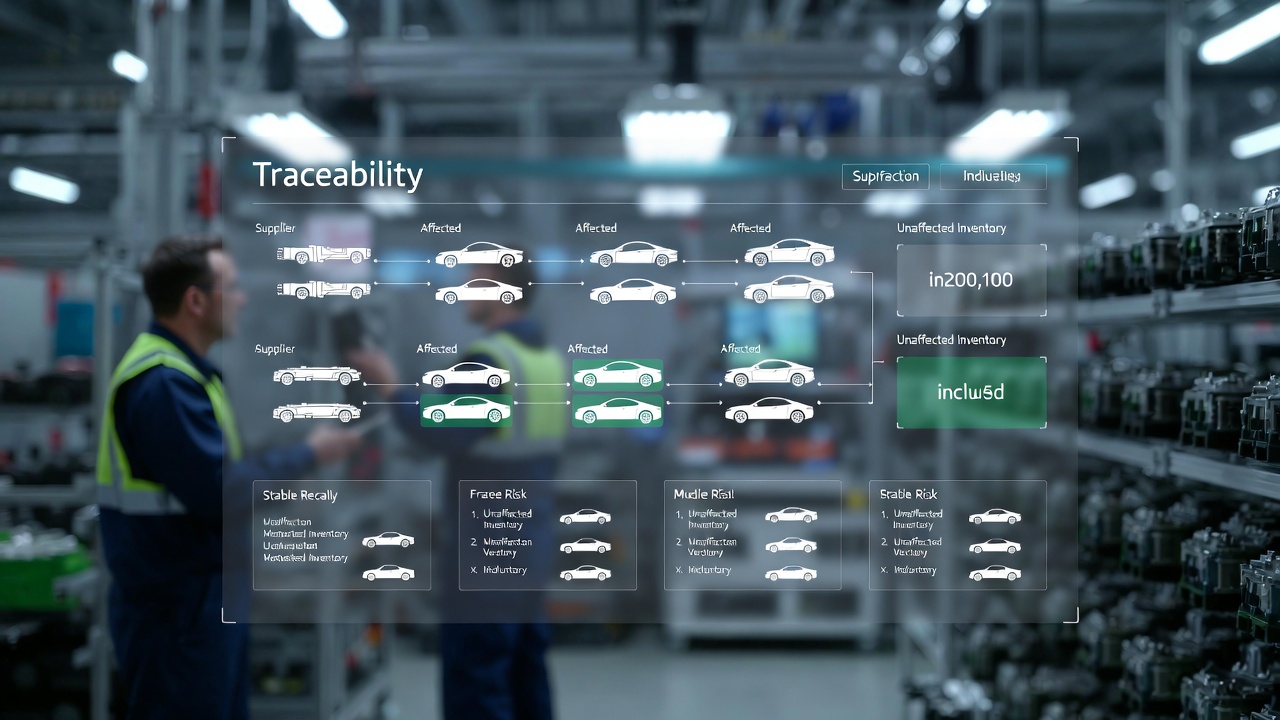
Instantiate RecallEvent(recall_id) objects and bind affected component batches using addAffectedPart(), resolving precise VIN impact through component-to-vehicle linkage .
Traceability-Backed & Chain-of-Custody Anchored
Bind GS1 EPCIS records via TraceabilityMixin.bindEPCIS() and synchronize regulator-grade evidence using GS1EPCISBridge.sync().
Legally Defensible & Timestamp Deterministic
Each recall scope is anchored on-chain with immutable object lineage, strengthening supplier liability allocation and recovery claims.
Regulator-Aligned & Infrastructure-Neutral
Supports NHTSA and UNECE reporting alignment without replacing ERP systems or determining fault; SagaChain records evidence, not enforcement actions.
Real-World Benefits
For OEMs
Reduce unnecessary recall volume by 10–25% through precise containment modeling.
Lower direct recall exposure by an estimated $2.4B–$6B annually under modeled scenarios.
Accelerate liability allocation and supplier recovery timelines.
Protect brand equity through targeted, VIN-specific remediation instead of mass notifications.
For Suppliers
Improve tier-level attribution clarity and reduce wrongful liability exposure.
Strengthen audit defensibility in litigation and warranty disputes.
Reduce actuarial uncertainty in recall risk modeling.

For Regulators & Compliance Teams
Improve reporting accuracy and timeliness for defect investigations.
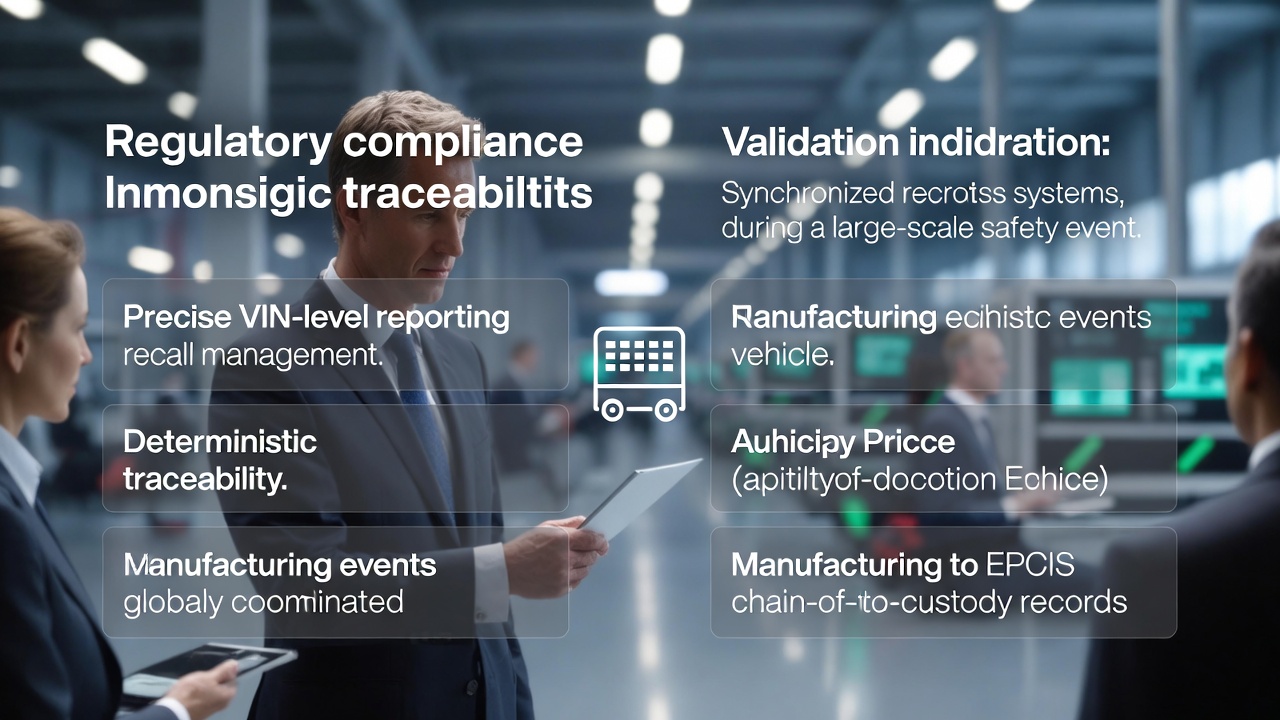
Gain deterministic, evidence-backed VIN traceability anchored to manufacturing and EPCIS chain-of-custody records.
Lower systemic reporting inconsistencies during large-scale safety events.
Industry-Wide Impact
10% containment precision improvement → ~$4B global recall cost reduction.
25% containment precision improvement → ~$10B reduction in annual recall exposure.
Improved supplier/OEM margin protection amid tightening profitability pressures.
Foundational infrastructure for next-generation compliance automation, insurance modeling, and cross-border regulatory interoperability.

Available now (on public development testnet) for review and testing
Pilots starts in ~90 days
Pilot 2 is live on the SagaChain testnet today — low-risk, infrastructure-based, and ready for real component batch data and VIN-resolution validation.
SagaAutomotive™ invites OEMs, Tier 1–3 suppliers, regulators (e.g., NHTSA, UNECE), standards bodies (GS1), insurers, and recall management teams to:
- Test deterministic recall scope modeling with real component batch data.
- Validate VIN-resolution precision using the Automotive Class Tree.
- Co-develop EPCIS mappings and regulator reporting integrations.
- Take shared custodianship to prepare for global production deployment.
This is more than a technical pilot — it is the foundation for measurable, multi-billion-dollar cost containment and legally defensible recall infrastructure across the global automotive ecosystem.
More than a technical pilot…
The automotive industry has a unique opportunity to take custodianship of this transformative class tree. By validating object flows (RecallEvent, ComponentBase, VehicleBase, EPCIS bridges), refining regulator integrations, and expanding supplier tier attribution models, stakeholders can materially reduce recall inflation, protect margins, and modernize compliance infrastructure.
Step forward today to co-build and benefit from the future of precision recall containment – reach out to [email protected] to get involved.